
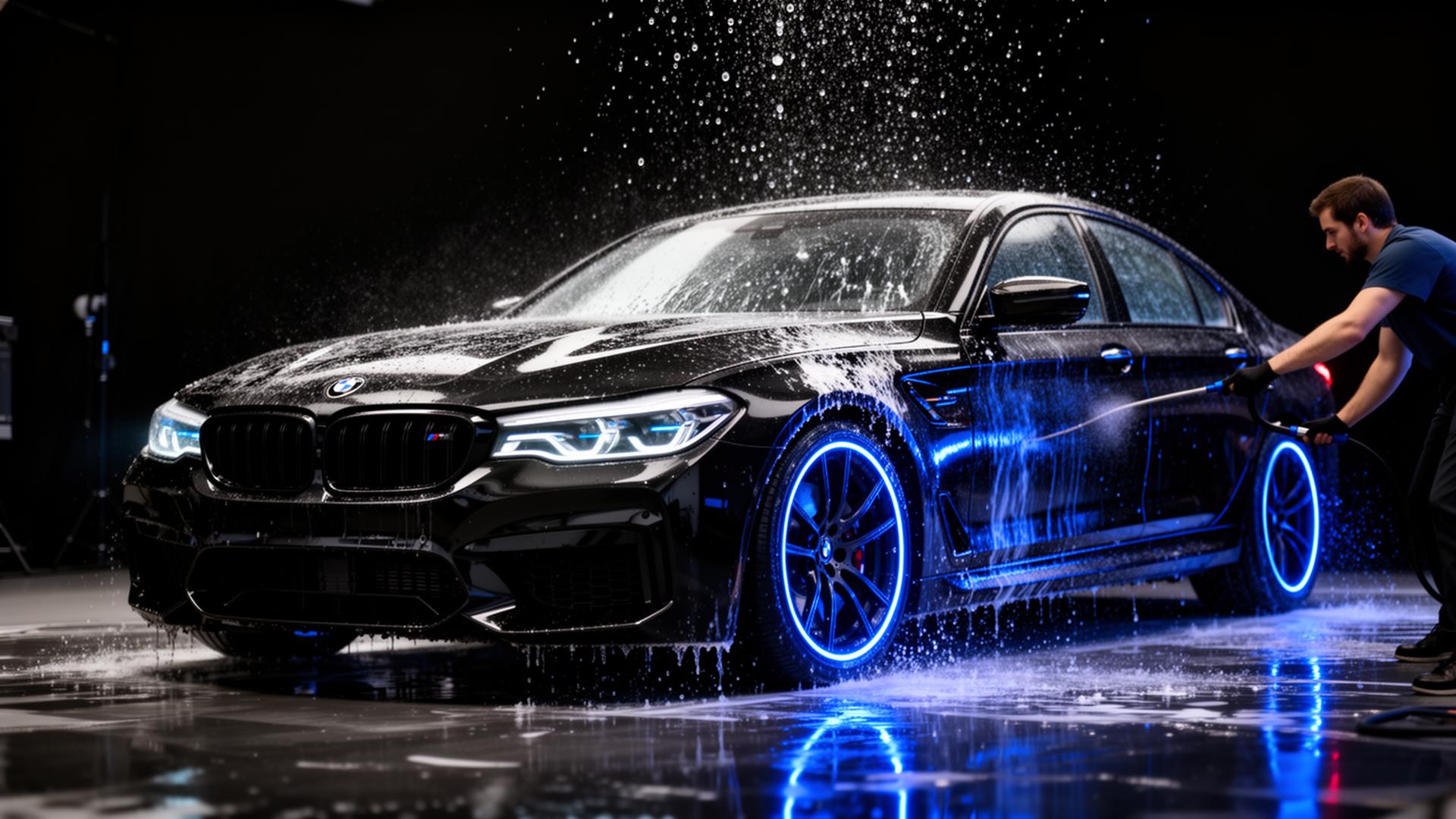
What automatic car washes actually do to paint
Modern rollover machines use softer cloth or foam brushes than the plastic bristles of the 90s, but they still drag the same fabric across every car that came before yours. Grit trapped in that fabric leaves fine circular scratches — 'swirl marks' — that show up under sunlight or LED garage lights. Touchless automatics avoid contact but rely on stronger chemicals to lift dirt, which can strip wax and dull trim over time.
What a proper hand wash does differently
A good hand wash uses the two-bucket method: one bucket of pH-neutral shampoo, one of clean rinse water with a grit guard. Wheels are cleaned first with dedicated brushes, then the body is washed top-down with a plush mitt that's rinsed between panels. Nothing that touched the road ever goes back onto the paint. That's the whole reason the finish looks different.
When an automatic still makes sense
If you drive a daily runabout and just want the salt off in winter, a touchless automatic once a month is fine. It's fast and cheap. But if the car is newer, darker in colour, or you care about resale value, the swirl marks from a rollover are hard to undo without machine polishing.
The jet-wash-yourself option
Coin-op jet washes are cheaper than a hand wash but the brush is almost always filthy, the shampoo is a caustic snow foam not meant for direct contact, and rushing in a bay tends to miss the lower panels where salt sits. It's a reasonable rinse — not a wash.
How long each result lasts
A hand wash with a proper wax or sealant will bead water for 6-10 weeks. An automatic wash-and-wax lasts 1-3 weeks at best because the wax is applied over dirt the brushes didn't fully lift. In real terms: one hand wash a month usually replaces three or four automatic visits.
Frequently asked
Is a hand car wash better than an automatic?+
For paint safety and finish quality, yes. A two-bucket hand wash removes grit before contact and dries with plush microfibres, so it doesn't leave the fine swirl marks that rollover brushes cause. Automatics are faster and cheaper for a quick clean.
Do automatic car washes damage paint?+
Modern automatics are much gentler than older brush machines, but any rollover that touches your car with the same cloth that touched hundreds of others can leave micro-scratches over time. On dark or metallic paint this shows up as swirls under direct light.
How often should I have my car hand-washed?+
Every 2-4 weeks is right for most UK drivers. In winter, closer to every 2 weeks because road salt is corrosive. In summer, every 3-4 weeks is fine unless you park under trees (sap and bird lime need washing off within days).
Is a hand wash worth the extra cost?+
If you plan to keep the car for 3+ years or care about resale value, yes — swirl marks and dull trim take money off a car at trade-in. If it's a short-term runaround, a monthly touchless automatic will do.