
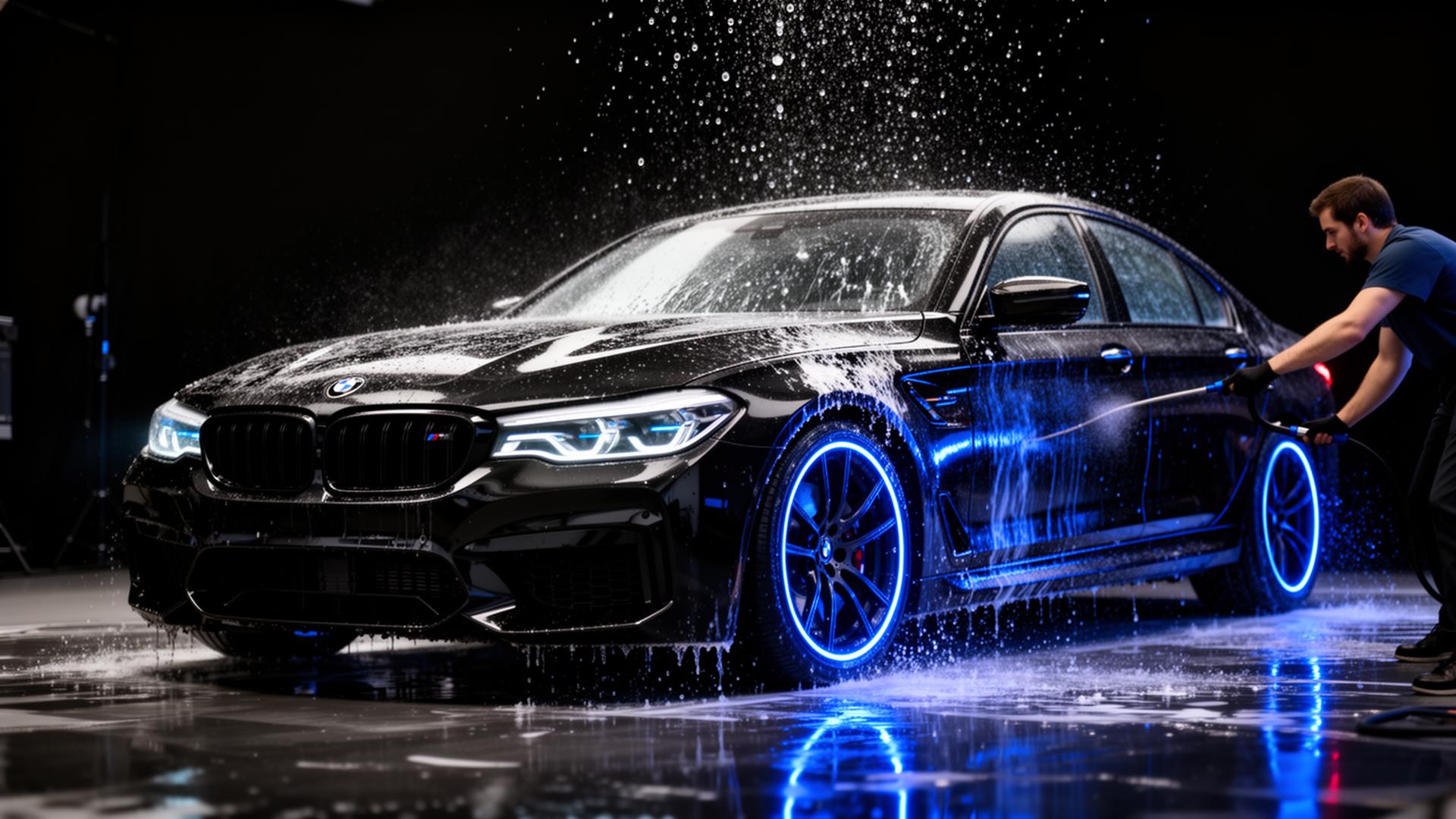
How ceramic coating actually works
It's a silica-based (SiO₂) liquid that cures into a glass-like film. Once cured it's harder than car wax, more chemical-resistant, and hydrophobic — water beads and rolls off, taking dirt with it. It doesn't make the car scratch-proof; it makes washing easier and paint last longer.
Why prep is 80% of the job
Whatever's on your paint when the coating goes on is sealed under it. That means a proper application involves: decontamination wash, iron fallout remover, clay bar, and — critically — a machine polish to remove existing swirl marks. Skip the polish and you've locked in every scratch for the next 3 years.
Real UK durability
Manufacturers advertise 5, 7, even 10 years. Real-world on a UK daily-driven car parked outside: 2-3 years for a single-layer consumer coating, 3-5 years for a two-layer professional application. Winter salt and automatic car washes shorten it.
Fair pricing in 2026
Small hatchback with existing paint in good condition: £300-£450. Full-size saloon or SUV: £500-£800. Add £150-£300 if the paint needs a full correction (multi-stage polish) before coating. Under £250 usually means no polish stage — walk away.
Aftercare
Wash with a pH-neutral shampoo only, avoid rollover automatics, and top with a compatible spray sealant every 3-4 months. Avoid washing for 7 days after application to let the coating fully cure.
Frequently asked
Is ceramic coating worth it in the UK?+
For a car you'll keep 3+ years and park outside, yes — it protects against salt, pollen and bird lime, and makes weekly washes take half the time. For a lease car you'll return in 24 months, a quality wax is usually enough.
How long does a ceramic coating last on a UK car?+
2-3 years for a single-layer consumer product, 3-5 years for a professional two-layer application. UK winters shorten it because road salt is aggressive.
Can I ceramic coat a car myself?+
You can, but the paint correction stage is what separates a good application from a bad one, and correction needs a machine polisher and experience. If you skip that step, the coating still bonds — but every existing swirl is sealed under it.